In development with practising dentists

Evidence‑backed clinical reasoning for dentists.

Describe a case. EvidenIQ structures it, surfaces what is missing, compares the options and shows the evidence behind each one. The dentist makes the decision.

See a session
  • Clinical guidelines
  • Systematic reviews
  • Peer-reviewed research
  • Consensus statements
Session · Case 0142 De-identified
Case summary & question
Could change the assessment
Periapical radiograph findings? Current INR & regimen? Restorability?
Options, with evidence
Non-surgical retreatment[1]
Apical surgery[2]
Extraction + implant[3]
Illustrative example · not clinical adviceGrounded in 12 sources
[1] Systematic reviewPublished 2023 · Source type verified
Safety pointAnticoagulant: bleeding-risk checks before surgical options
Built for
General dentists, dental chains and dental colleges
Input
A case summary and a clinical question, in plain text
Output
Missing-info prompts, considerations, options and safety flags — each linked to evidence
Decision maker
Always the dentist

(01) Why EvidenIQ

Dentists have no shortage of information.

The hard part is turning it into an answer for the patient in the chair.

  1. 01
    Finding the right evidence

    For this specific case — among search results, papers, guidelines, textbooks and colleagues.

  2. 02
    Judging how far it applies

    How strong each source is, and how directly it fits the patient in front of you.

  3. 03
    Doing it between patients

    In minutes, with the sources one click away — not after clinic hours.

The problem

Answering one clinical question means working across several sources, under time pressure.

01

Evidence is scattered

One question can mean moving between search results, papers, guidelines, textbooks and colleagues before a clear picture forms.


02

Time is short

Researching an unfamiliar presentation or comparing treatment approaches competes directly with clinical work.
03

Gaps are not always obvious

It is not always clear which piece of history, finding, contraindication or test would change the decision.
04

Options are hard to compare

Turning evidence into a side-by-side view of approaches, sequencing, benefits, limits and risks takes effort.
05

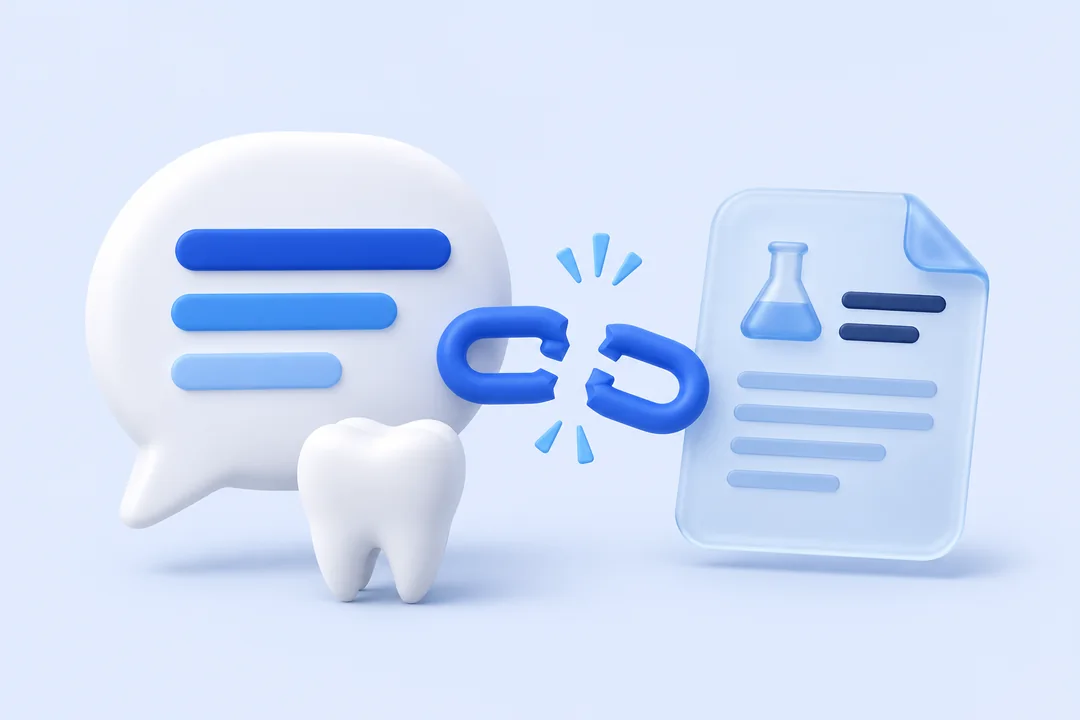
Generic AI is hard to verify

A fluent answer without traceable support is of little use where the dentist must be able to stand behind the reasoning.
06

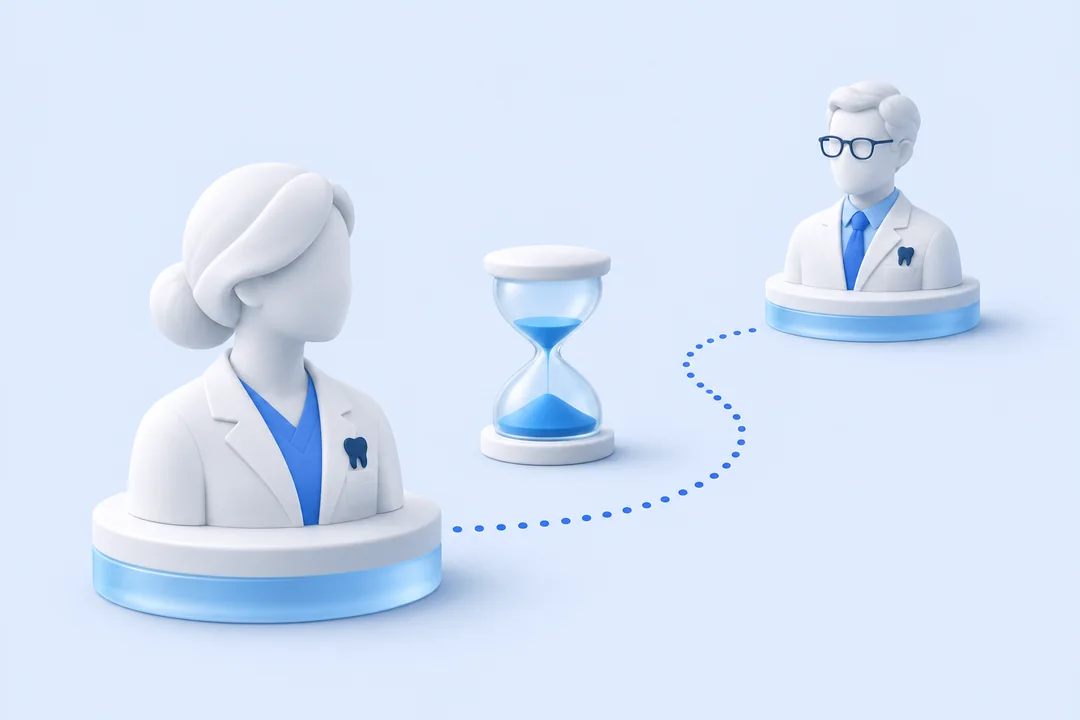
Expert input is not always at hand

In busy practices and multi-clinic networks, reaching a senior colleague or specialist for a second view takes time.

Five different needs sit behind every clinical question.

EvidenIQ is designed around the distinct tasks a dentist performs when working through an uncertain case — rather than treating them as a single search.

  1. 01

    Finding

    Locating relevant, current sources

  2. 02

    Interpreting

    Judging what a source says and how strongly it applies

  3. 03

    Structuring

    Identifying missing information and relevant possibilities

  4. 04

    Comparing

    Weighing options, sequencing and safety

  5. 05

    Escalating

    Recognising when a case needs a specialist

(02) What EvidenIQ is

From a clinical question to evidence you can check.

EvidenIQ is a clinical intelligence copilot built for dentistry. It structures the case, points out information that could change the assessment, sets out the relevant possibilities and options — and links each important point to the source behind it.

It works from a text description of the case. It does not analyse radiographs or images, and it is not a practice management system or a general-purpose chatbot. It does one job well.

Help dentists move from a clinical question to a structured, evidence-linked understanding of the available options — without replacing the dentist’s judgement.

Three principles shape the product

01

Evidence first

Answers are built from retrieved sources, and important claims carry a citation the dentist can open and read.

02

Uncertainty in plain view

When evidence is limited, conflicting, dated or indirect, EvidenIQ says so instead of offering false confidence.

03

The dentist decides

EvidenIQ supports review and verification. It does not diagnose, prescribe or act on a patient’s behalf.

(03) How it works

A structured reasoning session, not an open-ended chat.

Each session follows the path a careful clinician would take through an uncertain case, with evidence attached at every step.

01 / 07
Case 0142 / Describe the case Live session

Case summary

58-year-old patient. Recurring pain on the lower-left first molar, root canal treated around 4 years ago. Tender to bite. Takes an anticoagulant.

Your question

Should I consider retreatment, or extraction and an implant?

SymptomsHistoryMedications+ Findings+ Investigations

Before an answer — details that could change the assessment

  • ?
    Periapical radiograph findingsSize of any radiolucency, quality of the existing fill
  • ?
    Anticoagulant and latest INRAffects the safety of surgical options
  • ?
    Restorability of the toothRemaining structure, crack or fracture signs
  • Periodontal statusProbing depths within normal limits
    Added
Considerations for you to assess — not a diagnosis
  • Persistent apical periodontitis[1][4]
  • Coronal leakage[2]
  • Vertical root fracture[5]
  • Non-odontogenic pain[6]

Evidence strength shown per consideration. Missing radiograph findings limit confidence.

RetreatmentApical surgeryExtract + implant
Evidence
Keeps toothYesYesNo
Main limitDepends on canal accessSurgical bleeding riskLonger, staged timeline
SequencingFirst-line where restorableIf retreatment not feasibleIf non-restorable

Each cell links to its evidence. Trade-offs stay visible side by side.

Where the tooth is restorable, non-surgical retreatment is generally considered before extraction [1], though outcomes in this case depend on the radiograph findings not yet provided.

Systematic reviewPublished 2023

“…relevant passage shown here, so the dentist can read exactly what the source states…”

Source statesEvidenIQ infersOpen source
  • Medication considerationAnticoagulant therapy — bleeding-risk considerations before surgical options.
  • Red-flag checkNo signs of spreading infection reported. Confirm at examination.
  • Possible referralConsider an endodontist if a root fracture is suspected.

Your call

Proceed with plan Refer to specialist Override Second opinion
Was this response helpful? IncorrectUnsupportedUnhelpful

Feedback feeds a reviewed quality process. Clinical responsibility stays with you.

Why it mattersValue starts with the information the dentist already has.

Illustrative product experience. Example content is not clinical advice.

Inside the product

The real app, being built with dentists.

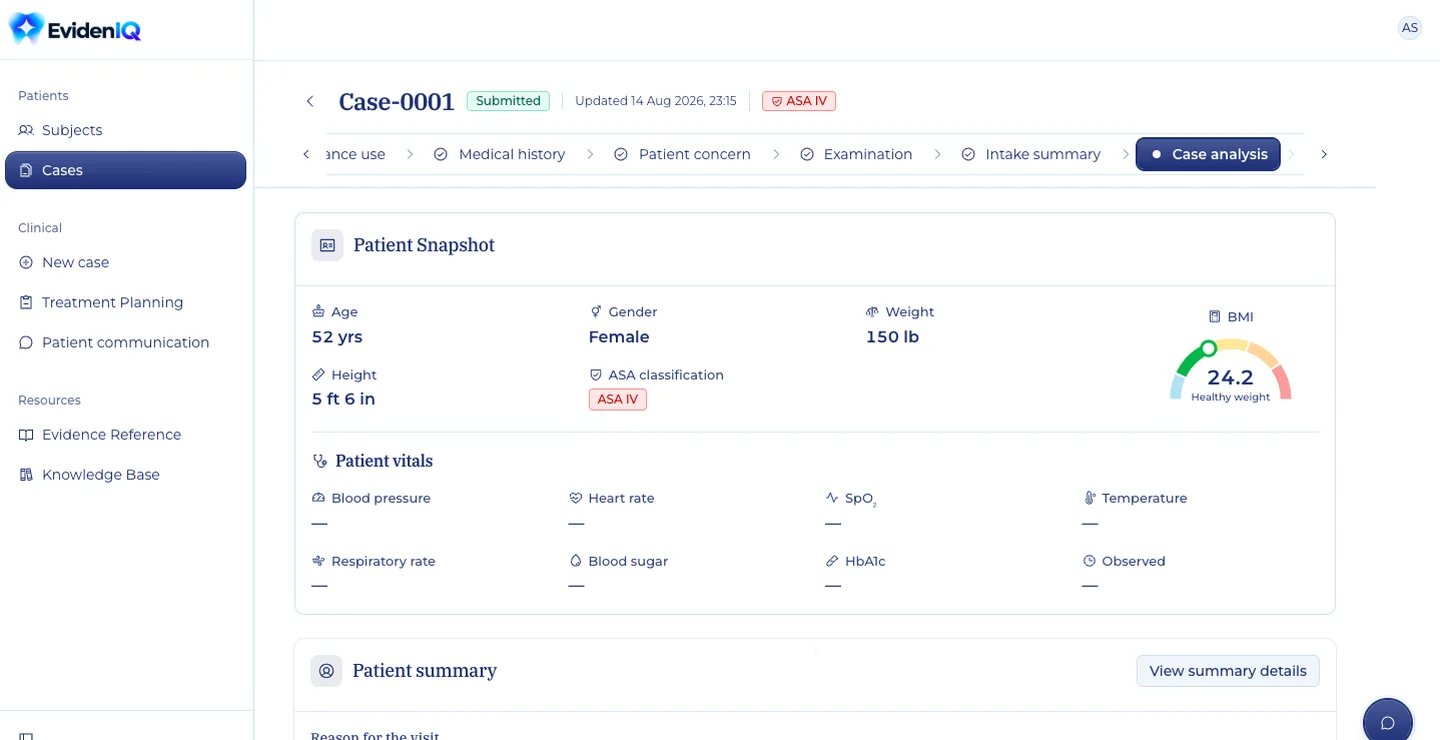
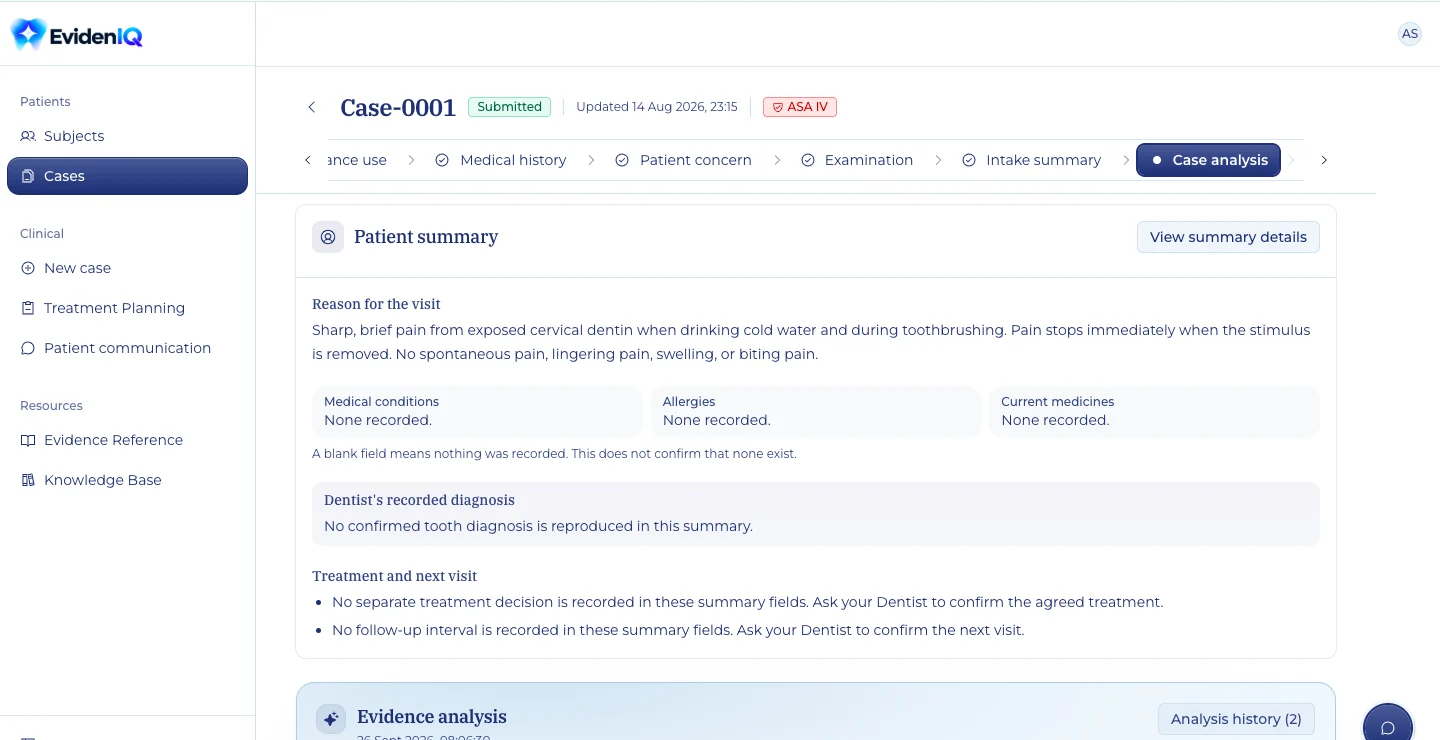
Screens from the current build, shown with test data. Details will change as clinical validation continues.
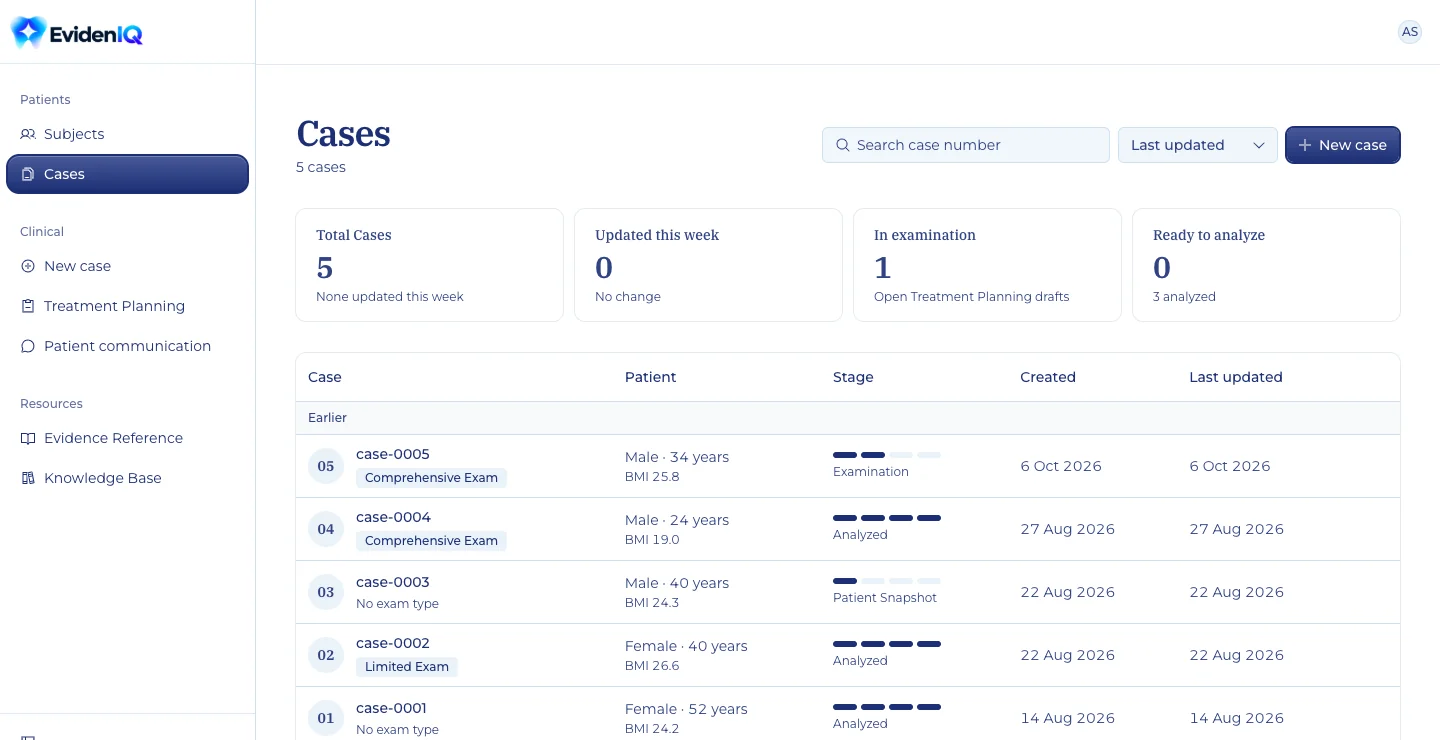
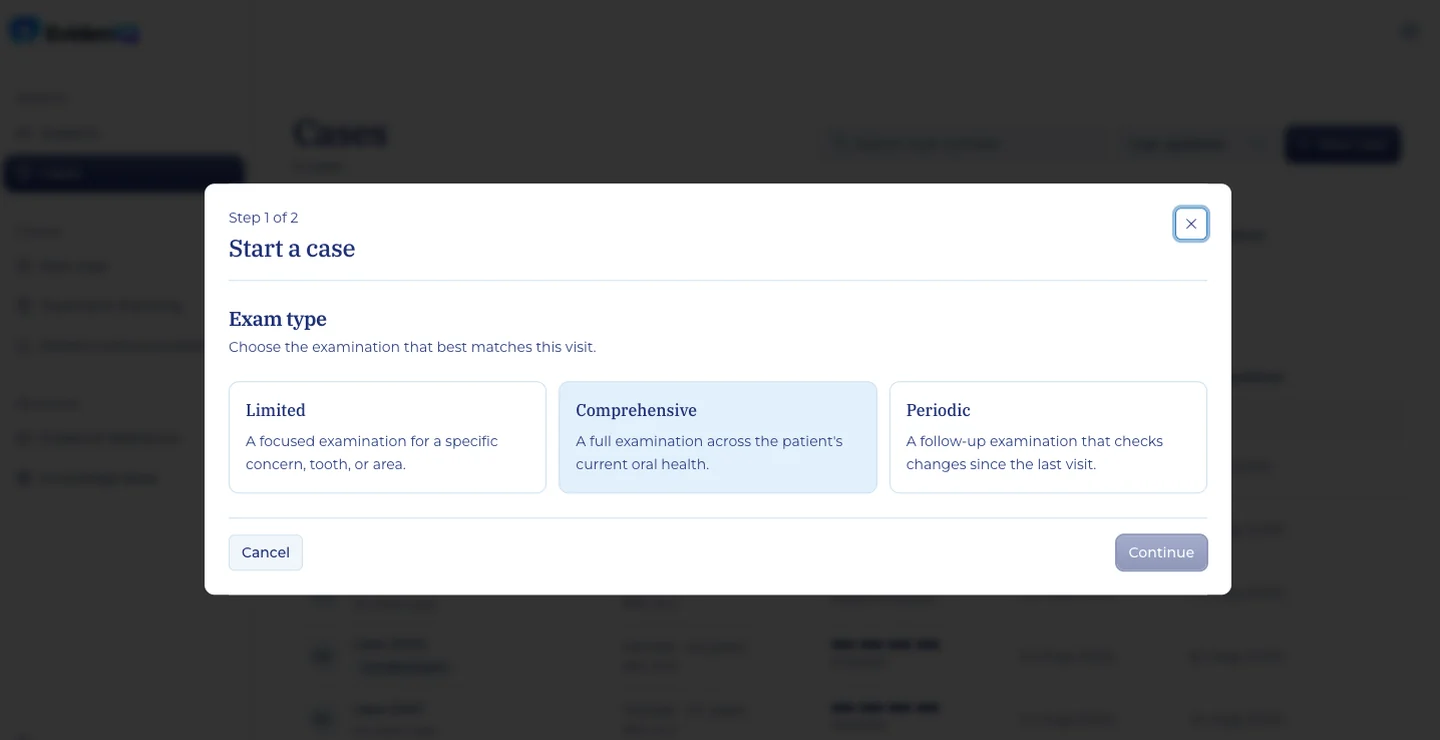
EvidenIQ · Clinical workspaceCurrent build
EvidenIQ cases list showing five cases with exam type, patient details, stage and dates Start a case dialog with limited, comprehensive and periodic exam types Case overview with patient snapshot: age, gender, weight, height, ASA classification, BMI gauge and vitals Patient summary noting that blank fields mean nothing was recorded, not that none exist

(04) Evidence you can inspect

Every important claim traces back to a source the dentist can open.

A plausible answer is not enough in clinical practice. EvidenIQ is built so its reasoning can be inspected, questioned and checked.

Exhibit 02 How EvidenIQ moves from question to answer
01

Interpret

Reads the question and case context

02

Retrieve

Pulls passages from the approved evidence base

03

Rank

Filters for relevance and source quality

04

Ground

Builds a structured answer linked to sources

05

Check

Flags gaps and conflicts — or holds back

Where the evidence comes from

A curated, versioned evidence base — not the open web.

  • Clinical practice guidelines from recognised bodies
  • Peer-reviewed research & systematic reviews
  • Consensus statements & specialty guidance
  • India-relevant guidance where it applies
  • Your organisation’s approved protocols*

*Where rights and governance allow.

What every answer shows

Claim-level citations, with the line between source and inference.

Retreatment is generally considered first where the tooth is restorable. Apical surgery is an option if retreatment is not feasible. Given the anticoagulant, surgical options may need medical input.

Evidence for option 2 is limited in this context
  • Inline citations beside the claims they support
  • A source list detailed enough to find each reference
  • Publication date and source type for every source
  • Guideline passages or short excerpts, where permitted
  • A clear line between what a source states and what EvidenIQ infers
  • A flag when evidence is limited, conflicting, dated or indirect
Recommends expert review
When EvidenIQ holds back

If the evidence is not strong enough, it says so.

Out-of-scope questions or thin evidence get a recommendation for expert review, not a filled gap. A citation must support the specific claim beside it — a merely related reference does not count.

How case data is handled

Minimal, de-identified input by design.

Defined access controls, retention rules and deletion. Data handling, governance and regulatory requirements are reviewed with specialists before any deployment with real cases.

Access controlsRetention rulesDeletion

(05) Who it’s for

Built for the dentist in the chair — and the organisations around them.

The primary user is the practising general dentist. Dental chains and colleges have their own reasons to adopt it.

Image placeholder · audience-dentistSquare 1024 × 1024 · bg #EAF1FF · Prompt A1 in IMAGE-PROMPTS.md
General dentists

Digitally comfortable clinicians with an active, varied caseload.

When they reach for it

  • An unfamiliar, atypical or complex presentation
  • Unsure what information is still needed
  • Comparing treatment approaches or sequencing
  • Checking medication considerations or contraindications
  • Deciding whether to refer
  • Explaining the evidence behind a treatment choice
What they get

A faster route to relevant evidence, with sources they can check and cite.

Image placeholder · audience-chainSquare 1024 × 1024 · bg #EAF1FF · Prompt A2 in IMAGE-PROMPTS.md
Dental chains

Clinical directors, medical directors and operations leaders.

Where it helps

  • Supporting clinicians across many centres with the same evidence base
  • Giving difficult cases a structured first pass before escalation
  • Making internal protocols easier to apply consistently, where approved
What they get

A shared, evidence-grounded reference point for clinical teams — introduced through a defined pilot with agreed success measures.

Image placeholder · audience-collegeSquare 1024 × 1024 · bg #EAF1FF · Prompt A3 in IMAGE-PROMPTS.md
Dental colleges

Deans, heads of department and clinical faculty.

Where it helps

  • Teaching students to reason from a case to evidence-supported options
  • Supporting structured case discussions
  • Letting faculty see and audit the evidence behind an answer
What they get

A transparent tool for teaching evidence-based reasoning, offered as a separate academic programme.

EvidenIQ gives a useful first pass and a clear view of the evidence. It is not a replacement for a specialist’s judgement — and it is designed to recognise when a case needs one.

(06) Where it fits

Designed to work alongside the tools dentists already use.

It does not try to replace search, research databases or colleagues. It adds a case-oriented, evidence-linked layer between the question and the answer.

Alternative todayWhat EvidenIQ adds
01Search engines

A workflow that starts from the case, structures the question and brings relevant evidence together in one place.

02Research databases & papers

A more direct path from a clinical question to relevant evidence — with the original sources one click away.

03Colleague or specialist

A structured first pass and evidence retrieval before or alongside a consultation. Specialist judgement remains essential.

04General-purpose AI assistants

A dental-specific experience with a controlled evidence base, claim-level citations, visible uncertainty and explicit clinical boundaries.

05Dental software with built-in AI

A focused clinical reasoning layer, rather than another practice management suite.

What EvidenIQ does

  • Accepts a text-based case and clinical question
  • Retrieves and summarises evidence from an approved source base
  • Prompts for missing case information
  • Organises relevant clinical possibilities
  • Compares treatment options with linked evidence
  • Flags medication, contraindication and referral considerations
  • Shows citations and uncertainty, and collects clinician feedback

What EvidenIQ does not do

  • Analyse dental images or radiographs
  • Diagnose, prescribe or carry out treatment on its own
  • Replace the dentist’s professional judgement
  • Change clinical protocols without oversight
  • Act as a practice management, EMR, billing or scheduling system
  • Claim equal depth across every specialty from the start

(07) Our approach

Developed with practising dentists, one use case at a time.

Rather than launching a broad platform, EvidenIQ starts with the clinical questions dentists face most often — and proves its value there before expanding.

Phase 01

Learn from real cases

Interviews with dentists and clinical leaders across dental chains, centred on recent cases and how they were resolved.

Phase 02

Choose the first use case

Select the clinical situations that come up often, cause the most friction and have a clear evidence base.

Phase 03

Benchmark with experts

10–20de-identified cases

Reviewed independently by a qualified expert panel.

Phase 04

Run controlled pilots

60–90day pilots

With partner organisations, agreed scope, approvals and success measures.

How quality is measured

  • 01Clinical reviewers score responses against an agreed rubric
  • 02Each citation is checked against the claim it supports
  • 03Missed contraindications, risk factors and information gaps are tracked
  • 04Appropriate abstention and escalation are tested on out-of-scope cases
  • 05Repeat use and time saved are measured over weeks, not single sessions

What comes later

Once the first use case has shown clear value, EvidenIQ may extend to:

Practice software integrationProtocol tools for dental chainsTeaching features for collegesPatient-friendly explanationsWider specialty coverage

Each added only when there is evidence it is needed and can be delivered safely.

(08) Work with us

Help shape evidence-backed dentistry.

We are looking for dental chains, colleges and practising dentists who want to help shape EvidenIQ.

  • Clinician interviews about recent, real cases
  • Expert case review on our benchmark set
  • An early, controlled pilot with your organisation
hello@evideniq.com

Connect with EvidenIQ

Let’s start a conversation.

Product enquiries, clinical collaboration, institutional conversations or early pilots.

I am a…
Interested in

Please don’t include patient-identifiable information.